Wastewater aeration: prepare a shared reading of process data
Dissolved oxygen, operating events and energy each describe a different part of the process. A clear timeline helps a team ask useful questions before changing a setpoint.
Start with a specific operating situation
A wastewater dashboard becomes more useful when it addresses a concrete question. Is the team trying to understand a dissolved oxygen variation, reconstruct an alarm sequence or compare operating periods? Defining the problem helps select relevant signals and avoids a display where everything appears equally urgent. The question should be understandable to both operations and technical colleagues.
This article proposes a method for preparing data. It does not recommend a setpoint and does not replace a plant’s procedures. Any change must remain the responsibility of authorized people and account for requirements that apply to the particular site.
Build an understandable signal dictionary
Before comparing curves, prepare a short record for each signal: equipment name, unit, probe location, recording frequency and data source. The same label can sometimes refer to a raw reading, an average or a calculated value. That difference should be visible in exports as well as in the interface.
The dictionary can also identify maintenance events and periods when a measurement requires cautious interpretation. The team then has a shared vocabulary for discussing an anomaly, without immediately attributing a change to the biology or equipment control. Keep this information accessible to people who join a review later.
Put events on a consistent timeline
Timestamps from controllers, historians and operator notes can differ. Checking their consistency is therefore an important preparation step. Within a selected period, a chart can bring together dissolved oxygen, equipment status and documented interventions, while retaining each series’ own unit and resolution. Relevant notes should identify which observations were entered manually.
A gap in the data should remain identifiable. A default held value should not appear to be a fresh measurement. In a review, separating observed facts, team hypotheses and outstanding checks makes discussion with operations and maintenance more useful. Avoid silently filling gaps with assumed operating conditions.
Read energy alongside treatment context
EPA publications identify aeration as an important topic in plant energy management. They also explain that excessive or insufficient aeration can create operating problems. A fall in electricity use is therefore insufficient, on its own, to demonstrate an improvement in treatment.
For an internal review, the team can display energy indicators alongside the available context: operating conditions, events and relevant monitoring results. The periods being compared need an explicit description. The goal is to make the comparison understandable, without promising savings or inferring compliance from one curve. The review should state which information was unavailable and how that limits interpretation.
Turn an alert into a documented check
A useful alert states what was observed, on which equipment and when. It can invite someone to consult a procedure or check an instrument. The person handling it should be able to record the result and pass the issue onward when it exceeds their role. A closed notification should retain the reason for its closure.
Before an automatic control strategy is changed, the process and safety owners need to review it. The proposed analytics log records decisions and their reasons; it is not an authorization for remote control. Data limitations should remain visible to users who were absent during the event.
Prepare a practical AquaPure Analytics discussion
An initial workshop can use a simplified process diagram, an inventory of data sources and an episode selected by operators. Anonymized sample files can show reading difficulties such as missing units, isolated alarms or scattered notes. The discussion can then focus on an actual operating question rather than an abstract dashboard demonstration.
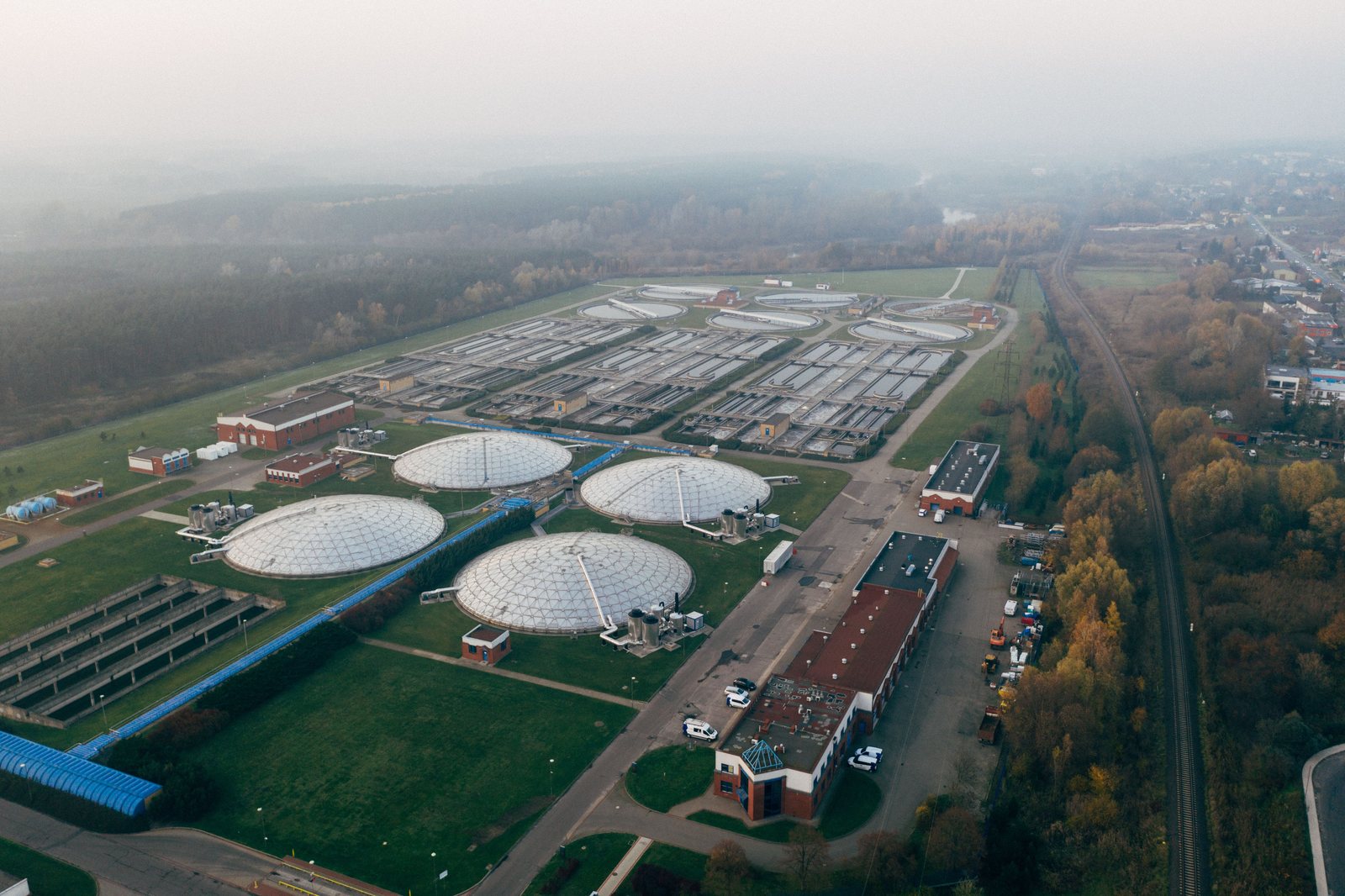
The photograph depicts a wastewater treatment facility in Poznań, Poland and is used as a technical illustration. It does not show an AquaPure client facility. The official guides below provide background; site conditions and local procedures must still be checked before an operating decision. No performance or compliance outcome is guaranteed by this workflow.
Sources and verification
- US EPA — Evaluation of Energy Conservation Measures for Wastewater Treatment Facilities (2026-11-06)
- US EPA — Energy Management Guidebook for Wastewater and Water Utilities (2026-11-06)
General information. Operating procedures, local requirements and individual circumstances must be checked before acting.